
The Reality of Choosing Schools is Even More Complicated than Nikole Hannah-Jones Says: Race, Class, and the Future of Education
THE BACKDROP
In 2015, I wrote a book called Those Kids, Our Schools: Race and Reform in an American High School that addressed the racialized experiences Black students were having in an integrated high school. My conclusion was that even in a racially and economically integrated school (35% Black, 60% White), in which Black and White students had similar economic backgrounds, Black students were still experiencing racism from their peers and educators. I got my author copies of the book from the publisher the week my first child was born. The following year journalist Nikole Hannah-Jones published her landmark essay in the New York Times about choosing a school for her Black daughter (which I read immediately).
The national conversation about race and schools was raging and a post-civil rights generation of middle and upper middle class Black parents were deciding where to send our children to school. Policy changes had allowed for the proliferation of charter schools and school choice options, and our own class privilege gave us the means to make such choices.
Teach for America (which placed young college graduates without teaching degrees into underserved schools to teach for a few years before going on to their actual careers) and KIPP (the charter school chain that was supposed to transform urban education) were household names. President Bush’s No Child Left Behind and President Obama’s Race to the Top, national policies intended to fix the problem of underachievement in low-income, majority-Black schools, were in the recent rearview mirror. Books like So Much Reform, So Little Change: The Persistence of Failure in Urban Public Schools and The Death and Life of the Great American School System: How Testing and Choice are Undermining Education were sparking discussion. Black professors I knew were hiring graduate students to drive their children to private schools an hour away in their never-ending, seemingly annual, search for a decent school option for their (upper middle class) Black children.
In short, the country was abuzz with dialogue, debate, and action about the achievement gap (reframed as “the opportunity gap” by progressives) in which Black, Indigenous, and Latine students overwhelmingly attended under-resourced schools and under-performed on standardized tests, while White and Asian students made up the overwhelming majority at highly resourced schools and of high performing test takers.
For a moment this week, I felt I had time warped back to the days of yore. Hannah-Jones dropped a 10-year update reflecting on, and ultimately regretting, the choice she made to send her daughter to her neighborhood, majority Black, lower-income school. The response (backlash really) was swift, with the essay covered by both The View and Meghan Kelly within 24 hours.
In my social network of Black college educated women with graduate degrees, it was like a meteor had hit. I spent the following day navigating different text threads with my college friends, graduate school friends, mom friends, colleagues, and more. The conversation that had been so prevalent a decade ago was back with full force!
THE CONUNDRUM
So what did Hannah-Jones share in this ten year update? The short version is that 72 years after the Brown v. Board of Education decision outlawed school segregation in the U.S., our schools remain deeply segregated along lines of race, class, resources, and teacher quality. With few exceptions, most high achieving, well resourced K-12 schools in the country still have overwhelmingly White (and in some places Asian) students, while most low achieving, under-resourced schools have predominantly Black, Indigenous, and Latine students. There are many poor White schools, often rural, but virtually no rich Black, Latine, or Indigenous ones. This is largely because schools tend to be funded by local property taxes, and our neighborhoods are racially and economically segregated.
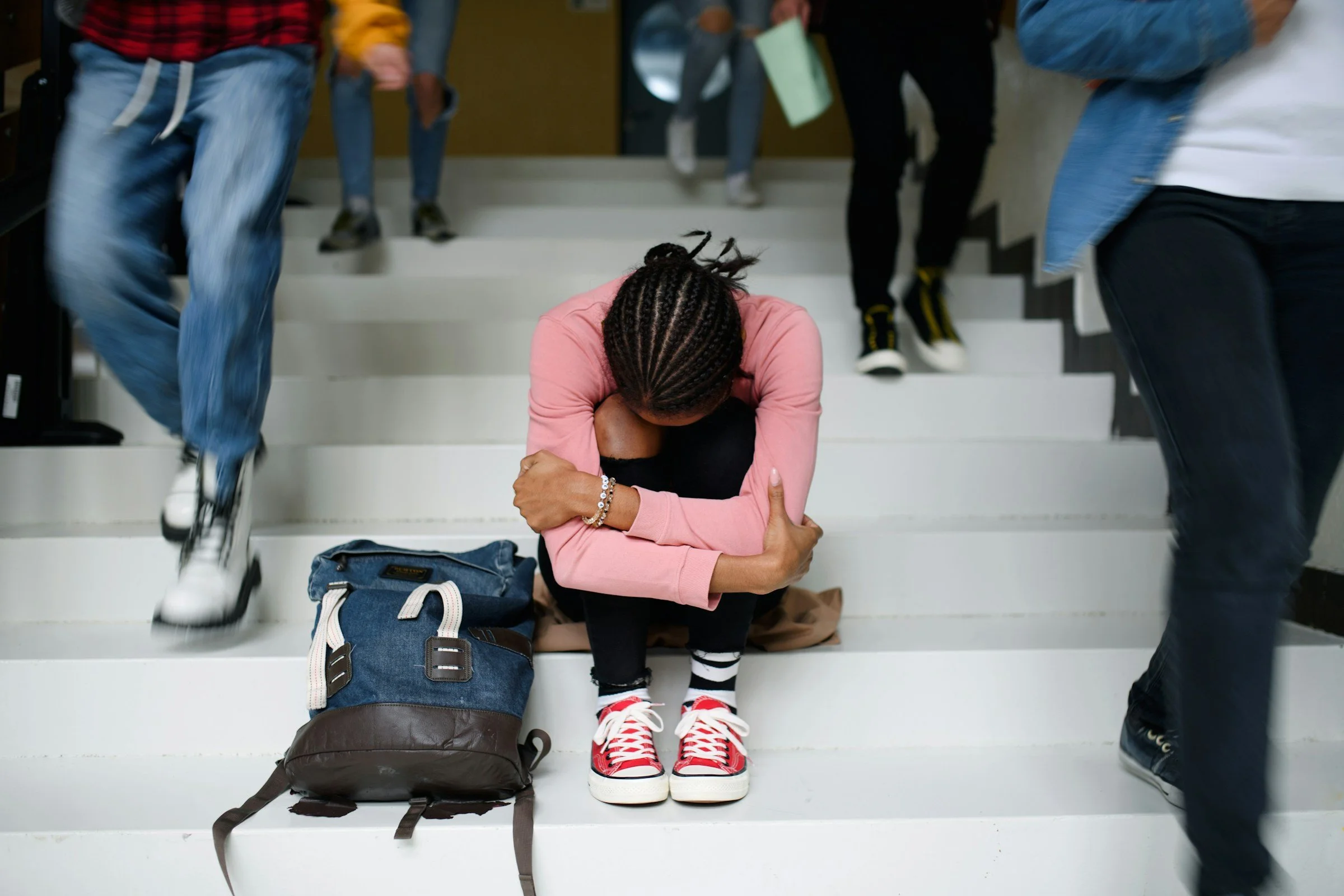
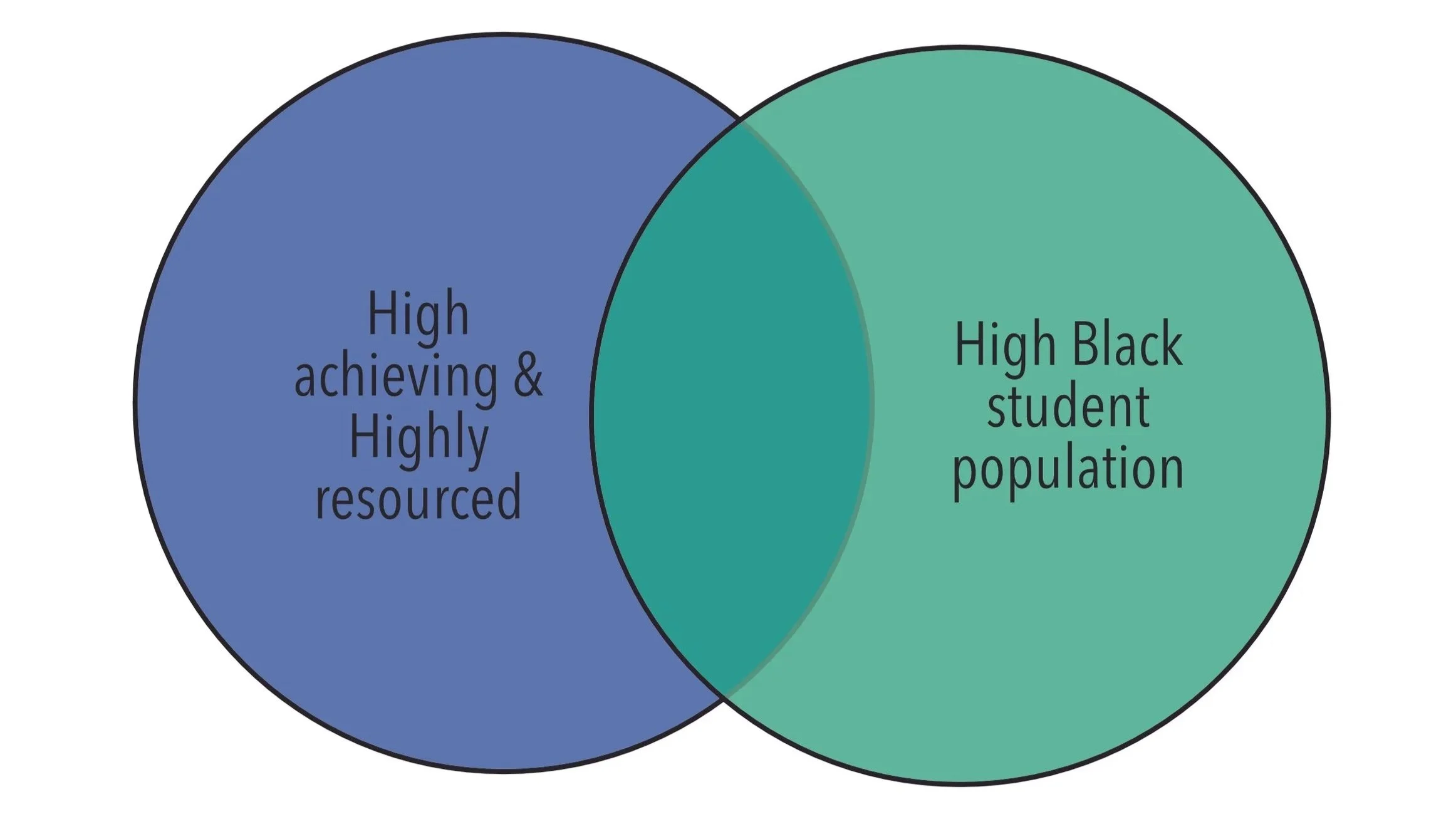
This reality puts Black middle and upper middle class parents who have the economic privilege of taking advantage of the school choices available (charter, private, micro, home, suburban, urban, etc.), in a bind: choosing to send our children to academically rigorous schools often means putting them in psychologically and emotionally unsafe environments in which they are often bullied by peers because of their race and don’t see themselves reflected in their teachers, curricula, or teaching approaches; while sending our kids to predominantly Black schools where they’re more likely to be supported psychologically and emotionally almost always means knowingly sending them to schools with less rigorous academics and way fewer resources. In most places in the country, there is nothing available in the center of the Venn diagram of high achieving schools and high Black student populations.
There’s another layer to the decisions of (Black) parents that was a more popular conversation a decade ago: What is our responsibility to all children, not just our own children? When parents with time, resources, and means choose the academically and economically privileged school for their child over the neighborhood one, they’re taking their resources and privilege with them—ultimately denying those resources to all of the children left behind who can’t (afford to) leave. Nikole Hannah-Jones was part of a larger movement of parents who decided that:
The trauma we’d experienced as the first, second, and third generations of Black Americans to integrate predominantly White schools was not one we wanted to repeat with our own children; and
If we cared about all (Black) children having opportunities for success, not just our specific children, we’d have to try to fix the schools that were failing them. That meant using our time, our money, and our activism to do so from within the system. If lack of resources was a problem of urban, majority Black schools in part because people with resources (and tax dollars) were fleeing them, a group of us would need to make the decision to stay.
Research supported the folks making this decision. Despite our popular American narrative that any child can go to any school and succeed if they “work hard enough,” the economic position of your family has always been the greatest determinant of your school success. The thinking among the justice-minded elite was that sending our kids to schools that support their social, emotional, and identity development would be unconventional but ultimately fine because our economic and educational positions would buffer them from the academic (read: future financial) risks. In so doing, we’d give our children something we lacked—emotional and psychological safety—while not taking that big of a risk (our own class positions and homes full of books would give them what they needed academically). We’d be part of the tide lifting all boats.
Although Black parents led this movement, organizations like Integrated Schools also took up the charge of encouraging (mostly White) parents with economic privilege to make different decisions than their own (White) parents had. Instead of fleeing city and public (read: Black) schools for suburban and private (read: White) ones, they advised White and middle class parents to send their children to their “global majority” neighborhood schools.
The mission of all of these people and groups was to make the intentional decision to economically integrate our schools—and for White parents to racially integrate them as well—a kind of reverse busing that would hopefully change the persistent tide of racial and economic school segregation and the academic inequality that accompanied it.
Ten years later, Hannah-Jones says she regrets her decision to send her child to the low-income, low-achieving neighborhood school. Now 16, her daughter has struggled academically and neither of them are happy about it. While there is so much to unpack about their specific situation, I will only say a couple of things before moving to my larger points about the system and culture of schooling in which all of our decisions exist.
First, as a social scientist, I caution us to resist the temptation to make a profile of one child the story of a nation. There are many young people in my life, and in our country more broadly, who similarly went through low-income urban school districts in major U.S. cities and their "outcomes" (how they did on the SAT, what colleges they got into, etc.) have varied wildly (from not completing traditional high school to perfect scores and MIT) just as all humans vary.
Second, I would remind us that this essay isn’t the end of the Hannah-Jones family school story. It’s maybe the middle. The underlying question is whether Black children in general can attend majority Black, under-resourced schools and end up with successful adult lives (by which we often mean good paying jobs). For this family, we will not know the answer for another 10 years or more. Who knows how things will look in the 2036 NYT cover story. Elite colleges and impressive careers may very well be in their future.
What we learned in this essay is that the schools Hannah-Jones’ daughter went to, especially her middle school, seemed to achieve the goal of supporting a solid sense of identity and community (a Black girl nerd friend group sounds like a dream!), and that their family’s economic and educational privilege gave her the resources to get into a good high school and the academic support to improve her grades. Did she fly through elementary, middle, and the first years of high school as an academic superstar? Maybe not, but that was always the risk, and we don’t have the counter-factual of how she would have performed in a different school. Going to a well-resourced school doesn’t guarantee you’ll be a top student there.
This doesn’t mean what happened in her schools was acceptable. Hannah-Jones documents many horrors. But if we are wondering if her own daughter is doing okay, well, it seems so.
THE BIGGER QUESTIONS
However, this essay has caused such an uproar not because the nation is so deeply concerned about the plight of this family, but because of what it implies for the rest of us. In debating if Hannah-Jones and her spouse made the “right” or “wrong” choice for their daughter (from what is arguably a menu of only bad options), we are missing many larger questions that her essay points to.
Question 1: How should we navigate the relationship between school achievement and class inequality?
Coincidentally, as I write this I am in the middle of putting the final touches on my three new children’s picture books about class (available now for pre-order everywhere books are sold online, out October 6 ;-): The Awesome Kids Guide to Class, Share: A First Book About Class & the Economy for Awesome Kids, and Work: A First Book About Valuing Everyone’s Labor for Awesome Kids. I also just wrote a blog post in of recognition Labor Day about the importance of talking to our children about class. This is to say, I’m thinking A LOT about class (and its connections to race and education).
The number one reason school choice is so fraught for parents—of all races—is because of the perceived connection between school success and adult earnings.
The number one reason school choice is so fraught for parents—of all races—is because of the perceived connection between school success and adult earnings and class positions. School is a microcosm of our larger capitalistic society. Our struggles with schools are ultimately reflections of our struggles with our larger socio-eceonomic system.
Most parents and educators engaging in this conversation are concerned with what we call “equity.” We generally accept that our country is economically unequal—some people have very low-paying jobs while others make billions of dollars. However, most of us would like our schools to be different—to be places where children learn enough, and get enough, to be able to reasonably compete for positions in our country’s top universities and jobs in our country’s most profitable industries.
The idea is that schools should provide equal/equitable resources and equal/equitable education to all students, and then once they hit 18 it’s off to the races to figure out who is going to get the biggest pieces of our economic pie. Most of us hope that those pie eaters are more racially diverse than they would have been a generation ago, and that our own children are among them. It’s unclear if we think there should be more economic diversity. And there’s very little conversation about what it would take to actually expand the number of people who get dessert–very little talk about “justice.”
This equity framework tends to produce cognitive dissonance. The idea that schools–an institution of society–can somehow be more equal than the society in which they are situated is naive at best. And our failure to demand a society that is actually more equal for everyone, beyond our school buildings and childhoods, is a failure of those of us committed not only to school equity but also to social justice.
Here’s the problem: we live in a country where only a handful of jobs lead to economic security for a small percentage of the population. But that shouldn’t be the case! We should have a society in which we all have enough to meet our needs. Because we don’t, preschool placements and 8th grade algebra scores become pressure cookers that we think will determine the rest of our children's lives because our assumption is only a few of them can win.
Rather than focusing on only individual school choices, or even equalizing school districts, we should also recognize that schools exist in a society, which has a culture and an economy. And perhaps the problem isn’t (just) the schools, but the whole system. If we actually had a society that financially valued all workers (remember when we were clapping for “essential workers” during Covid while still not paying them a living wage?), we wouldn’t have to fight so hard to get our kids into a few select schools that we consider their only ticket to professional career success.
Question 2: What are the roles and responsibilities of parents in schooling?
A lot of the conversation about Hannah-Jones’ essay is about the role, responsibility, and involvement of (Black) parents in their children’s education. This part of the dialogue has raised two important questions:
Who is primarily responsible for a child’s education? If the answer is schools, then as a society we should be demanding good ones for all kids. What’s happening in our urban and rural public schools should not be allowed to stand. If it’s parents, that means a lot of kids are “S.O.L.” as the saying goes, because a lot of families are not equipped to take on that responsibility and children don’t pick their families. The current reality is probably that it’s a bit of both. But what would a system rooted in justice say in response? Should your school success depend, as it currently does, on your parents?
What is the role of parents/families in improving their specific child’s school? Hannah-Jones highlighted the various ways she and her husband were involved as parents in their daughter’s education. And many of the responses I’ve seen to her essay are about getting “involved.” But what does that actually mean? And what impact can that involvement have on an intractable system? How did it matter for her own daughter’s schools?
The sad reality is that the ways parents can be “involved” in schools—even those with the most skill, time, and resources—ultimately don’t touch the places that lead schools to fail kids.
For example, if student behavior is a challenge in part due to schools being understaffed, PTA fundraising and emails to administrators about behavior concerns, don’t actually fix that. They don’t create new lines of funding that allow schools to hire more staff. They don’t increase pay to be able to retain more staff. And there is little one parent can do to help another parent’s child “behave” at school (short of volunteering to be that child’s classroom aide).
One of my best friends volunteered on her lunch break to be a lunch/recess monitor at her daughter’s majority Black, low-income school because the only real fix to not having enough adults in the building is more adults. How many other parents would have to volunteer at recess, lunch, passing period, etc. to make up for the missing staff? How many parents are collectively organizing around this? There have been times in our history when parents—usually stay at home mothers—spent a lot of their free time volunteering in their children’s schools. And in many schools the hiring of paraprofessionals has been an effort to formalize this arrangement. But in our modern society where people work more this is less common.
Similarly, if the reason kids aren’t learning math (or reading, or science, etc.) is because they have teachers who are struggling to teach well, the only actual solution is to hire better teachers or make the teachers we’ve already hired better. Again, not a task that can be achieved by even the most “involved” parent.
Unless we are suggesting that parents with means literally become the teachers of their children's schools (this actually is a model, we call it “homeschooling”; to a lesser degree it might be called paraprofessionals or classroom aides), there is a truth we struggle to accept: the major challenges of schools—especially those that are under-resourced and underachieving—are not fixable by even the most thriving PTA. And even when they are fixable—or shiftable—there is a reality that our own children are unlikely to be the beneficiaries. Change in institutions is slow. Even if a school committed to re-training all of their staff, or to a multiyear increase in hiring, or to revamping the curriculum—the kind of work schools hire me to help with—our individual children will likely be long gone before we see the fruits of that labor. Other times our labor never blooms because our kids are on to the next class and the next grade before it’s had time to germinate.
The problems Hannah-Jones identifies with under-resourced schooling are not generally problems parents can fix, especially individual ones. This is why organizations like Integrated Schools are trying to organize parents to do this collectively. But even in those instances I question if the levers parents are pulling are the ones that lead to the change they desire. The needs of schools and the possible actions of parents are, for the most part, fundamentally misaligned, and we haven’t quite figured out what to do about that.
Question 3 (THE Question): Why schools? What are we even trying to do here?
The final question I think we should be attending to should really be the first question. It’s THE question:
Why schools?
What exactly is the purpose of schooling?
What are we hoping to achieve with them as a society? As a family? For our individual child? Why do we send our kids to schools 180+ days a year?
I’ve worked with thousands of educators over my career so far, and I often ask them this question. I’ll be honest, most of them haven’t given very much thought to it, nor have most of the parents I talk to. This failure to engage with the why of it all is ultimately at the crux of this entire uproar.
At my organization, Justice Leaders Collaborative, we believe there are 3 purposes of schooling:
1. Childcare. Straight up, a lot of what schooling is about is giving children a place to be so that parents can work. People don’t like to think of schools as childcare (I’d argue because we have classist ideas about the value of care work). But it’s the truth. Even teachers can teach because their own children are being cared for at school. Schools are the number one childcare provider in the country, and as such, they should be good at caring for the nation’s children. This means they cannot be places where your children are physically, psychologically, or emotionally unsafe. If your child is experiencing severe bullying, violence, or identity harm at the hands of their childcare provider, you shouldn’t leave them there! That’s basic parenting. And it’s why a lot of Black parents feel they cannot choose all White schools (see my book Those Kids, Our Schools or my post about the N-word in schools as examples).
2. Preparing students to take care of themselves, their families, and their communities (on a dying planet). This is where traditional academics fit—the reading, the writing, the algebra. But let me push back a bit. What skills do children and youth actually need to develop in order to be prepared to take care of themselves, their families, and their communities in modern times? Not in 1976 or 1996, but in 2026, 2036, and 2046?
Hannah-Jones’ essay felt “out of time” for me not only because it was reigniting the national conversation about race and schools, but also because I read it on the heels of listening to a podcast about AI, which her essay doesn’t address (this isn’t a criticism, writing a specific piece for a newspaper is a struggle and not everything can fit). But I couldn’t stop thinking: where’s the AI of it all? What will AI, and other technological advances, mean for standardized tests? For writing? For reading? For “learning”? For work? For families and schools with resources and for those without?
In the podcast I was listening to, the Dean of Harvard College talked about how he thinks colleges and universities should embrace AI technology and double down not on knowledge acquisition (the computers have that handled apparently), but on relational skills, collaboration, innovation, and human connection (I’ve got no argument on those skills). All of my teacher and professor friends are stressing about controlling AI “cheating” and what exactly they should be doing in this technological age. Think pieces abound about whether or not the four-year college experiment is a wrap. Ph.D.s are struggling to find professor jobs, and tons of recent college graduates (many from elite universities) cannot find any jobs.
I’ve seen numerous reports about students at the top colleges who graduated from the top high schools who are unable to read books (for pleasure or otherwise) or do math (again, do they need these skills? at what level? for what purpose?). We’re in a complete (and warranted) panic about phones and social media frying our brains and contributing to a very serious mental health and attention crisis in our society. And this week there have been serious discussions about whether or not AI is going to kill us all.
My point is that we are failing to adequately wrestle with what this moment of technological and social change means for the purpose, goals, outcomes, and theories of schooling.
But even putting aside my personal obsession with the technological future, what is our ideal scenario for what schools should be doing and how? What are our actual theories of how people—especially children—learn? Is what we’re doing all day in classrooms actually aligned with those theories? What are our goals for our children? What are their goals for themselves? If they end up as plumbers, construction workers, artists, musicians, careworkers, or delivery drivers is that acceptable? What does it mean to educate whole, healthy, critically thinking humans? Are schools—even the most elite—currently doing this?
3. Preparation for living in a diverse, multiracial democracy. This conversation has centered a lot on what Black parents and children give up when we choose how to educate our children—a painful plight I can attest. And, we’re trying to prepare all students to live in a diverse, multiracial democracy at a time of severe political polarization and a backlash against the entire democratic project. So we also need White children to go to diverse integrated schools. While White students are rarely put in the position of being the “only” in their schools, or of experiencing racial bullying, segregated all-White schools do not ultimately benefit them either, nor do they benefit our country. If we’re serious about equity (and justice), we also have to include White children in these efforts so that they grow into adults committed to this mission as well.
A NEW WAY
Here’s the thing: I think our current school system is fundamentally misaligned with the goals of education, society, and humanity. Not just the low-achieving, majority Black, under-resourced schools (which no doubt have it the worst)—all of the schools.
Here’s the thing: I think our current school system is fundamentally misaligned with the goals of education, society, and humanity. Not just the low-achieving, majority Black, under-resourced schools (which no doubt have it the worst)—all of the schools.
Our school system focuses on “academics” at the expense of psychological safety. We focus on “academics” at the expense of the relationship-building, communication skills, innovation, agility, creativity, and critical thinking that young people will need to function in a world with technology that can do literally everything we’ve been teaching for hundreds of years. We focus on “academics” at the expense of raising children to build relationships across differences in diverse environments that will sustain the future of our multiracial, multiethnic democracy. We reiterate the belief that we’ve only succeeded as parents if our children are doctors, or lawyers, or engineers. We sort kids into tracks that lead some to Harvard and others to McDonalds, often starting in preschool, and then decide if they deserve to eat based on that track because we’ve decided to only pay some of them well (again, I refer you to my new books about class).
And we are actually doing pretty badly at the academic part too! Because it turns out that making kids sit for longer and be lectured more by adults, putting them in competition with each other starting in kindergarten for the best grades and the few honor roll spots, telling them they can’t move their bodies at school and also can’t move them at home because they need to sit more so they can do more school work, doesn’t spark the joy of learning (research says a lot of successful students care more about getting A’s than about learning new things), or make them want to read for pleasure (look up the reading stats in our country), or help them see the ways math is all around us, or make them want to try writing an essay or a novel, or lead them to search for the latest updates on the James Webb Telescope in their free time.
It also turns out that getting straight A’s at the best schools, with tons of extracurricular activities, and a grammatically perfect compelling college essay, doesn’t actually guarantee a great job in a society that’s turning all the labor over to computers and all the money over to the billionaires and trillionaires—although more and more evidence is showing it is a quick pathway to a mental health crisis.
We’ve accepted this unjust school system, this unjust social system, this unjust economic system and it’s crumbling down around us. This is why people across the country are starting microschools, turning to various forms of homeschooling, moving their children from school to school in search of a decent one, signing their kids up for online schooling, and more, all in the hopes of finding something better, because the current system actually doesn’t work. Not just for Black kids (although especially not for them), not just for Hannah-Jones’ kid (although as I argued earlier, I think time will tell on that); it doesn’t work for any of us.
And it’s not just failing the students. A lot of teachers I know, some of the best, have left the profession not just because they aren’t earning enough money, but also because they fundamentally disagree with the system we’re (still) using to educate our children. Because they’ve realized that what humans need to live together in our current society and to be whole and healthy, creative and critically thinking, and what they need to do well in school are actually not aligned.
Our conversation about the Hannah-Jones family has been focused on which impossible choice individual Black parents should make to hold on to the crumbling rungs of a socioeconomic ladder in which getting top grades guaranteed other things about life. But maybe instead we should be trying to figure out what we want and need from this project we call schooling for the future.
To the Black parents of children right now, I’ve got no good answers for you. You can choose a school that helps your child feel good about who they are, but if you have traditional goals of academic success (you still/also want them to get the “best” grades and scores and get into the “best” high schools and colleges—which again, I’d push you on), be prepared to supplement their academics from day one. You can choose a school with strong academics in which they are one of only a few kids of color, but be prepared to get them a therapist and a community group from jump. You can take a third path, which more and more people are choosing, and opt out altogether to homeschool/ microschool/ alternative school/ unschool and embrace the responsibility you already know, feel, and have, but know that you’ll reduce your earnings because you can’t be with your kids all day and be at work (refer to purpose #1 of schooling: childcare). Whatever you choose, there will be sacrifices made.
Overall I have a lot of sympathy for and feel solidarity with Nikole Hannah-Jones and her family. I appreciate her honesty, vulnerability, and her activism. She has an admirable way of making us have the conversation that needs to be had. I must say though, I found it shocking that she seemed to conclude that the answer to our conundrum of failing schools might just be: more homework, better testing, more tracking, and an honor roll celebration—the most traditional, throwback, schoolish schooling ideas ever.
It feels like we’re clinging in despair to a system that’s quickly becoming a relic of the past. This makes a sort of sense. How do you build the master’s house in late-stage capitalism? With the master’s tools. And we all need a place to live. Some of us would like our children to have a very nice one. But while wrestling with how to make our current schools work better (for middle class Black kids) may be an equity perspective, it alone isn’t a justice perspective, nor is it a future looking one.
I hope whatever you do, you also spend some time thinking about and advocating around the bigger questions: What would a fair and just society look like? And what is the role of schools within that society?
Shayla Reese Griffin, PhD, MSW is co-founder of Justice Leaders Collaborative & Justice Leaders Press, which are committed to dismantling oppression, cultivating justice, and nurturing wellbeing through social justice training, consulting, resources, and books. Shayla is the author of many books and resources for children and adults. She lives with her spouse and three children and gets her best ideas at 3 am. (For those keeping tack, she wrote the original draft of this essay from 2am-4am).
Learn more about her work at www.justiceleaderscollaborative.com and www.justiceleaderspress.com.